
Government. Nonprofit. Corporate.
Shantay has held executive roles in all three sectors. That's not a résumé flex. It's how she spots what's about to break — and how to fix it before it does.
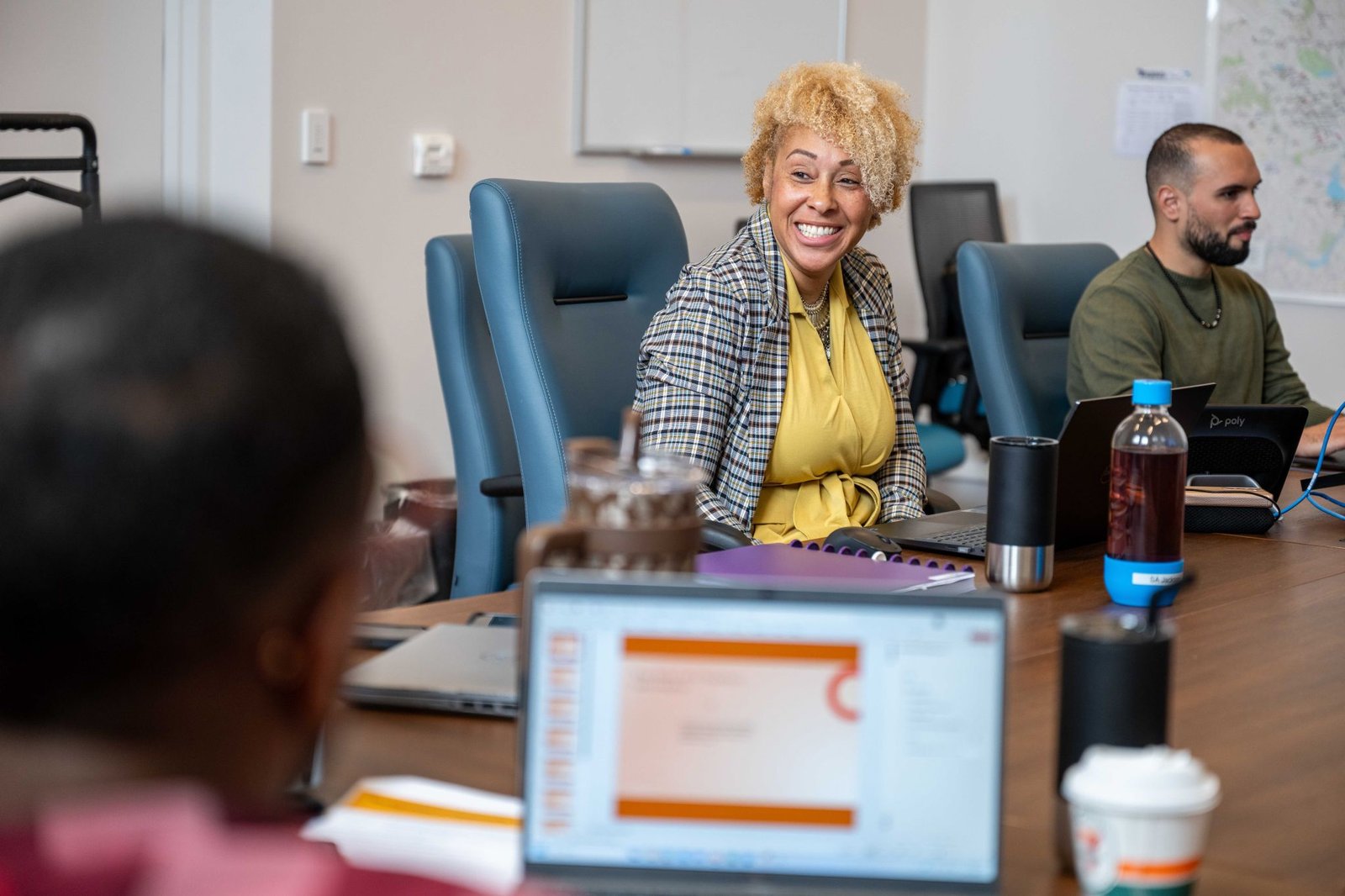
From corporate America to City Hall.
Shantay began her career at T. Rowe Price, where she learned how large organizations actually run — the systems behind the systems, the operations that produce results when leadership turns over. She moved next into nonprofit leadership at the Baltimore Community Mediation Center, then into government as Baltimore's first director of the Mayor's Office of Neighborhood Safety and Engagement.
Over the next two years, she grew MONSE into a nearly fifty-person agency — designing the staffing structure, funding strategy, cross-sector partnerships, and political alignment needed to sustain the work long term. Under her leadership, MONSE became central to a strategy that produced double-digit reductions in violence. In 2023, she went national as director of the National Offices of Violence Prevention Network — growing it from 45 to almost 90 member jurisdictions in two years. Her work has helped shape how jurisdictions across the country approach violence reduction infrastructure, cross-sector coordination, and long-term public safety strategy.
With EVOLVE to Lead, Shantay has the autonomy to do the real work for the jurisdictions that need it most.
While violence reduction strategy is the firm's primary practice, Shantay also coaches and advises executive leaders across government, nonprofit, and private-sector organizations navigating scale, transition, or operational reset. The throughline across both practices is the same: build systems designed to last.
Four principles that shape every engagement.
Plan for my exit from day one.
The work isn't done until the system runs without me. I build for handoff — staff capacity, documented playbooks, succession plans — so what gets built doesn't depend on my continued presence.
Design for political transitions.
Administrations change. Funding shifts. Initiatives get renamed. I build systems with enough institutional weight to survive all three — structurally sound, staffed appropriately, and integrated into the jurisdiction's broader public safety strategy.
Bring the operator's lens, not the consultant's.
I've held executive roles across three sectors. I know what it feels like to be responsible for outcomes, not deliverables. That changes the kind of advice I give and the kind of work I'm willing to take on.
Build the work around what's needed.
Not what maximizes the contract. The scope flexes to fit the problem in front of us — not the other way around. Sometimes that means smaller engagements; sometimes deeper ones.
What it's actually like.
The work is intense. The stakes are real — lives, funding, political capital. But intensity without humanity burns people out. Shantay brings both.
She's direct without being harsh, rigorous without being rigid, and genuinely funny in rooms where people forget that's allowed. She'll push you — on your assumptions, your timelines, your blind spots — but she does it in a way that makes you better, not smaller.
"There's never been anything brought up in a training that Shantay hasn't experienced. Having somebody there that really understands the nuanced things we're describing has been extremely helpful."Dr. Holly Joshi, Chief, Oakland Department of Violence Prevention
In a field still dominated by masculine norms of leadership, Shantay brings something different — care and compassion infused into the work itself, not bolted on as an afterthought. Directors who've worked alongside her describe someone they can pick up the phone and call, not just for strategy but for the kind of thought partnership that helps them navigate what no playbook covers.
Whether it's a room of twenty mayors or a one-on-one with a first-time OVP director, she meets people where they are and moves them forward. That's not a management philosophy. It's just how she's wired.
Background Highlights.
Experience & Appointments
- Reentry Services, Maryland Department of Public Safety & Correctional Services — Executive Director
- National Offices of Violence Prevention Network (NOVPN) — Inaugural Director
- Mayor's Office of Neighborhood Safety and Engagement (MONSE) — Founding Director
- Baltimore Community Mediation Center — Executive Director
- Baltimore Police Department Consent Decree Monitoring Team — Community Engagement Liaison
- T. Rowe Price — Associate Vice President
- White House Community Violence Intervention Collaborative — Representative
Recognition & Boards
- City Executive of the Year — Honorable Mention
- Black Girls Vote: Ladies in Politics — Awardee
- Radio One: Leader in Politics — Awardee
- California Violence Intervention and Prevention Program — Executive Steering Committee
- Public Safety Policy Lab — Board Member
- Police Executive Research Forum — CVI Advisory Board Member
- My Covenant Place — Advisory Board Member
Education & Certifications
- Doctorate in Business Administration (Expected 2028) — Edgewood University
- B.S., Management Information Systems — Coppin State University
- Certified ScrumMaster (CSM)
- Maryland Association of Non-Profit Organizations — Certified Consultant
- CMM Performance-Based Evaluation Mediator — Level 5
Speaking that bridges policy, practice, and people.
Shantay speaks nationally on violence reduction strategy, Office of Violence Prevention design, and public safety transformation. Her approach blends operational experience, policy insight, and frontline systems-building — helping audiences move beyond theory toward practical implementation.
She regularly facilitates executive strategy sessions, moderates cross-sector conversations, and designs convenings that help jurisdictions translate ideas into durable public safety infrastructure. As director of the National Offices of Violence Prevention Network (2023–2026), she led the Network's annual convening and regional gatherings, supporting peer learning for almost 90 jurisdictions nationwide. Shantay is available for keynotes, panels, and expert testimony.
Common questions.
Who is Shantay Jackson?
Shantay Jackson is a national violence reduction strategist and systems builder known for helping jurisdictions design public safety infrastructures that survive leadership transitions, funding shifts, and election cycles. She previously helped build Baltimore's Office of Neighborhood Safety and Engagement (MONSE) and later led the National Offices of Violence Prevention Network (NOVPN), supporting jurisdictions nationwide.
What does EVOLVE to Lead do?
Evolve to Lead helps organizations, jurisdictions, and cross-sector leaders build systems that are operationally strong, strategically aligned, and designed to last. While much of the work focuses on violence reduction and public safety infrastructure, the practice also supports organizational development, leadership strategy, ecosystem coordination, operational planning, convening, and systems transformation across nonprofit, government, and community-based settings.
What is community violence intervention (CVI)?
Community violence intervention (CVI) is a public safety approach that reduces violence through community-led, evidence-informed strategies such as credible messenger outreach, hospital-based intervention, focused engagement, and Offices of Violence Prevention. CVI is increasingly recognized nationally as a critical component of sustainable violence reduction.
What is an Office of Violence Prevention?
An Office of Violence Prevention (OVP) is a government agency that approaches community violence as a public health issue rather than a policing issue. OVPs coordinate violence reduction strategies across jurisdictional agencies, contract and oversee community-based intervention programs, manage data and accountability, and connect local work to state and federal funding. They are sometimes called Offices of Neighborhood Safety, Offices of Public Safety, or by other jurisdiction-specific names. Many U.S. cities with serious violence challenges now have an OVP or are exploring one.
What's the difference between an Office of Violence Prevention and a police department?
An Office of Violence Prevention treats community violence as a public health issue; a police department treats it as a law enforcement issue. The two are designed to work alongside each other, not replace each other. OVPs focus on prevention and intervention — reaching the people who are at highest risk of violence before it happens, supporting victims, and addressing the underlying conditions that drive cycles of harm. Police departments focus on response, investigation, and arrest after a crime has occurred.
How do you build an Office of Violence Prevention?
Building an Office of Violence Prevention typically begins with three things: a problem analysis of the jurisdiction's existing violence reduction work, a landscape analysis of community-based organizations and government partners, and a strategic plan that defines the office's scope, structure, and metrics. From there, the work moves into hiring, funding, partnership development, and operational design — typically over a 12 to 24-month period. Cities standing up new OVPs often work with outside consultants who have done the work before, in order to avoid the early mistakes that most first-time offices make.
What does a violence reduction consultant do?
A violence reduction consultant typically advises governments, nonprofits, and funders on how to think about reducing community violence — bringing frameworks, research, and recommendations to inform decisions. The work usually ends with a strategic plan, a report, or a presentation. Shantay Jackson works at a different layer: where most consultants advise, she designs — translating those recommendations into the staffing structures, governance models, funding strategies, and operational systems that have to exist for violence reduction to actually happen. Mayors, County Executives, Governors, and OVP directors have engaged her not just to think through their approach, but to architect the offices and infrastructure that deliver it.
What does a public safety strategist do?
A public safety strategist designs the long-term plan that holds a jurisdiction's violence reduction work together — diagnosing the existing system, identifying gaps, choosing the right mix of prevention, intervention, enforcement, and restorative strategies, and aligning city agencies, community organizations, and funders behind a single approach. The strongest strategists in this field operate as architects rather than advisors: they build plans that translate into operational systems, and they design for survival across leadership transitions.
How do I work with Shantay?
Engagements typically begin with an introductory strategy conversation focused on your jurisdiction's goals, challenges, and current infrastructure. From there, Evolve to Lead works with partners to determine the level of strategic support, facilitation, or systems-building needed. Visit the Start a Conversation page to begin.
Let's build what lasts.
Whether your jurisdiction is launching a new Office of Violence Prevention, strengthening an existing strategy, or navigating what comes next, Evolve to Lead helps leaders build durable systems designed for long-term impact.